Boulder’s bond names its projects only as examples, costs out to more than it would raise, and arrives with a second measure that would lift the city’s borrowing limit tenfold.
BOULDER, Colo. The ballot question for Boulder’s $400 million Recreation and Safety Bond lists six projects: the South Boulder and North Boulder rec centers, fire stations, a new police and 911 building, the downtown municipal building and a city maintenance yard.
It introduces them with two words: “such as.”
Under that wording, the list is illustrative, and the city is bound to build none of it. The rest of the ballot language lets the City Council set the terms of the debt and spend the money “without limitation or condition.”
Voters are being asked to approve up to $400 million in borrowing and up to $650 million in repayment, collected through a new property tax. They are being asked by a council that, for a decade, has struggled to say what its projects cost.
EXAMPLES ONLY
The city’s marketing is specific. Its website assigns a price to every project and a video to most of them. None of that is on the ballot. What voters approve is the language, and the language promises nothing in particular.
That matters because the city has already shown how far its estimates move. The South Boulder Recreation Center, the bond’s signature project, was a $21 million rebuild in April 2025. It is a $65 million project today, for a building that has not been designed.
NUMBERS THAT DON’T MATCH
Even the city’s own list doesn’t fit inside the bond. Its estimates for the six projects total $444 million, $44 million more than the measure would raise.
The city’s answer is that it may sell some buildings to cover the gap, and if that falls short, it “would re-scope projects.” Something on the list may shrink or disappear after the vote, and the ballot language allows it.
The largest item, a $170 million police and 911 building, doesn’t have a site. Its price, the city says, “depends on selected location.” It is also the project the city plans to start first.
A HIGHER CEILING
On the same ballot sits question 2M, which would rewrite the city charter’s cap on borrowing. The limit is now 3 percent of the assessed value of property in Boulder. The measure would make it 3 percent of full market value.
Because assessed values are a fraction of market values, the effect is enormous. Open Boulder, a civic group, estimates it would raise the city’s debt limit from about $152.7 million to about $1.55 billion. By that estimate, the current cap is less than half what the bond alone would borrow.
The city describes the change as bringing Boulder in line with how most Colorado cities calculate their limits. It also means the $400 million request is the first draw on a line of credit ten times larger.
‘SHOW ITS WORK’
KC Becker served on the Boulder City Council in 2011, when the city last took a capital bond to voters. That plan, she wrote in a column in August, was built by 15 residents in months of public meetings, where staff had to defend every project before a dollar figure was set.
This one, she wrote, began with a poll on how to persuade voters. The city’s June survey found about 45 percent support. The council voted unanimously to put it on the ballot anyway.
Becker, who went on to serve as speaker of the Colorado House, says voters are being asked to “write a check first and find out what it paid for later.” She will vote no, she wrote, until the city publishes real per-project costs and the assumptions behind them.
WHAT’S BEING ASKED
If the city borrows the full amount, the owner of a $1 million home would pay about $400 more in property taxes each year for 20 years.
Supporters on the council say the backlog is real and delay only raises the price. On the first point, few disagree. The question on the ballot is whether a council that couldn’t produce a simple accounting of its last major project should get $400 million, a list it can rewrite, and a borrowing limit ten times higher, all in one vote.
How we got here: $366M the price of new city offices
The city’s own figures show what its new office building will cost, how the price grew, and how little of it voters were asked to approve.
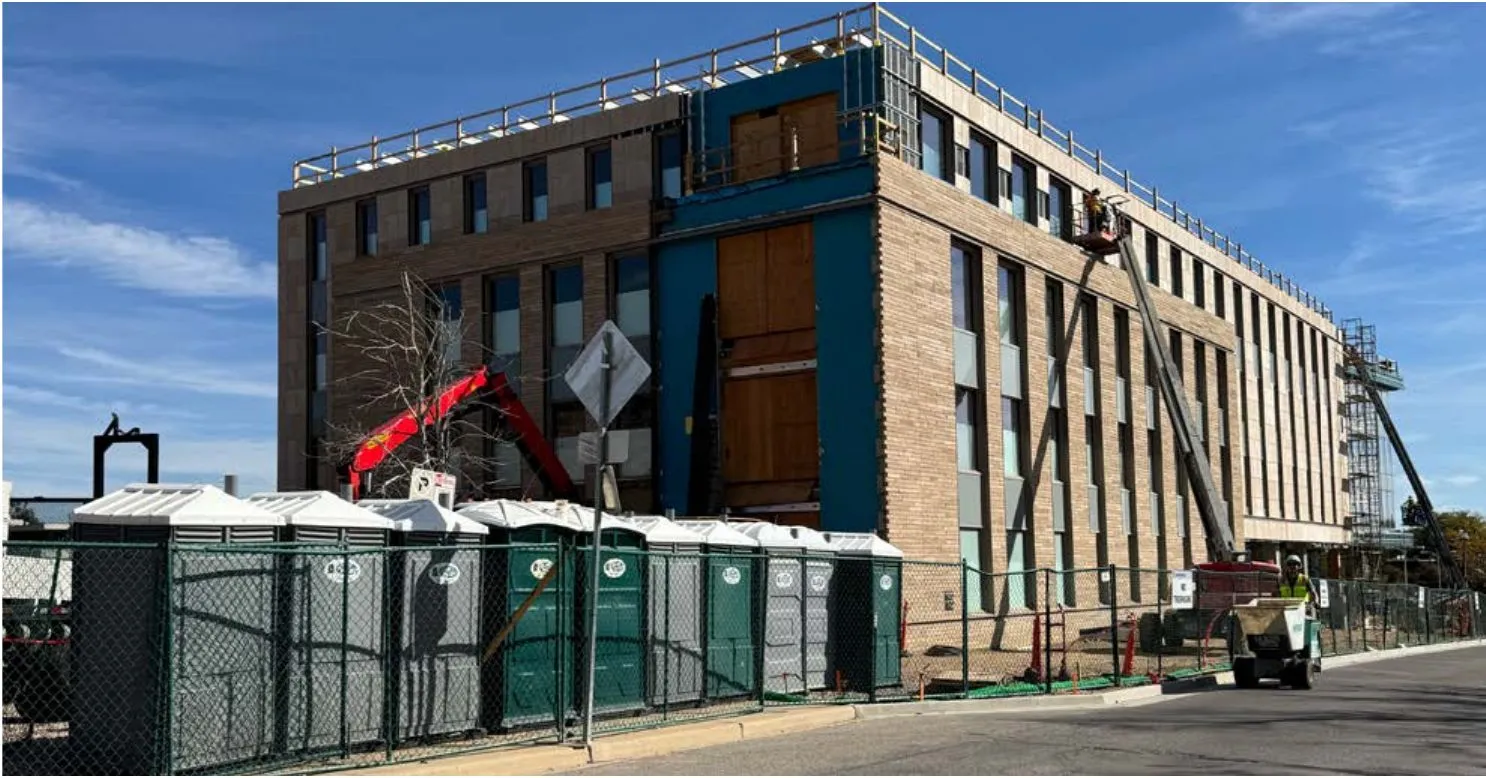
BOULDER, Colo. By the city’s own figures, Boulder’s new office building will cost nearly $2,000 a square foot. Count everything the city has committed to the site around it, and the price passes $3,100.
The first number comes from a spreadsheet the city published on Sept. 9. The building, known as the Western City Campus, will cost $233 million, including $90 million in interest on the debt that financed it. Its architects put it at about 117,000 square feet.
The second comes from the $366 million the city has committed to the surrounding Alpine-Balsam site, measured against that same office space. That larger total also covers the land, the demolition of the old Boulder Community Health hospital, a parking garage, flood work and the city’s investment in housing on the site.
The spreadsheet capped a summer of questions from Terri Brncic, a resident who began asking in June what the project would cost and where the money was coming from. It shows a decade in which the price climbed, council members voiced doubts and pressed on anyway, and voters were never asked to approve any of the borrowing.
It arrives weeks before those same voters decide whether to let the city borrow $400 million more.
WHAT THE NUMBERS SHOW
The building is a renovation and expansion of a former medical pavilion, nearly doubled in size by a four-story timber addition.
Northglenn built a new city hall from the ground up in 2024 for about $1,040 a square foot. Because Northglenn paid cash, with no borrowing, that is what the building cost its taxpayers.
The city says its price is in line with its neighbors. “The cost per square foot of this building is comparable to that of recent public buildings in nearby cities,” it says in an online history of the project published alongside the spreadsheet.
The affordable housing that helped justify buying the site has yet to rise. The first homes are expected in 2028.
DOUBTS, THEN A GREEN LIGHT
When the council first weighed the renovation in 2019, staff estimated it at $48 million to $58 million, Boulder Beat reported, and said it would pay for itself compared with renting. Councilmember Bob Yates objected that the analysis ignored the cost of repaying debt.
The building has since grown, and the price has grown with it. Construction alone now runs $117 million. The building is designed for more than 600 employees sharing desks, more than double the 2019 plan.
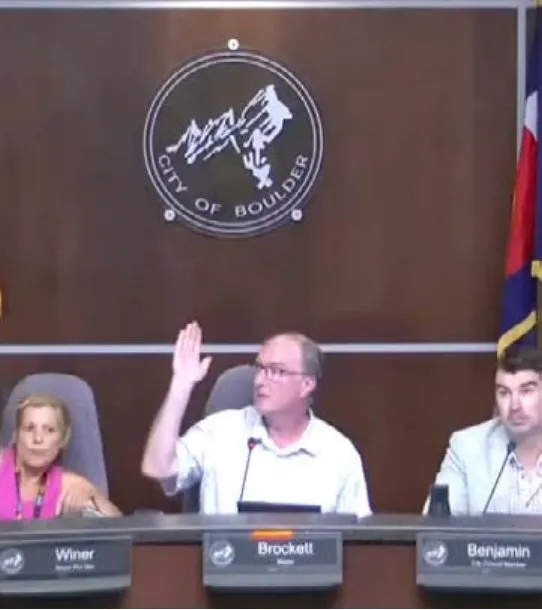
That spring, nearly every council member at a budget session questioned whether to continue. Aaron Brockett, now the mayor, said the dollar amounts increasingly concerned him.
“I don’t know what the exit path would be,” he said, “but I think we should explore it.”
A month later, the council chose to continue. In October 2024, as the council approved a key ordinance for the project, Brockett said, “[It’s] really exciting to see us hit this major milestone.”
NO VOTE, NO LEDGER
Voters never approved the borrowing. The city bought the site in 2015 with certificates of participation, a lease-based financing tool that Colorado courts have held does not require a public vote. In March 2025, the council used the same tool to borrow up to $100 million for the building, passing it as an emergency ordinance, a fast-track procedure the city charter reserves for emergencies involving public peace, health or property.
Brncic, an Open Boulder board member and former council candidate, wrote in a Boulder Reporting Lab column in August that she asked the City Manager’s Office and council for the project’s costs for months before filing an open records request. The city missed the law’s deadline to respond, she wrote. A representative then told her there was “not a compiled simple table” of the project’s costs and asked for more time, citing staff’s work on next year’s budget. Three weeks after her column appeared, the city published its spreadsheet.
QUESTIONS FROM THE DAIS
That same week, council members pressed city staff on how Alpine-Balsam’s costs had been communicated.
“No one should learn something critical about any major infrastructure project from anyone other than us first,” Councilmember Rob Kaplan said, according to a meeting summary. He asked whether cost updates could reach the council and the public earlier.
Deputy City Manager Chris Maschak said the project had been managed within budgets the council authorized. Staff pointed to the new spreadsheet and offered to review how large projects are reported. Council members asked for changes that would surface cost overruns sooner.
VOTERS’ TURN
On Nov. 3, the $400 million Recreation and Safety Bond goes to the ballot. With interest, the city estimates it would cost $650 million to repay. If the city borrows the full amount, the owner of a $1 million home would pay about $400 more in property taxes each year.
Unlike the borrowing for Alpine-Balsam, this debt needs voters’ approval. Brncic has made up her mind. “I know how I’ll be voting,” she wrote.